Navigate the complex world of work permits and visas abroad. Get expert insights on types, eligibility, and application processes — with support from Bac International.
For many aspiring international professionals, the process of obtaining a work permit or employment visa represents the most complex and anxiety-inducing aspect of working abroad. Visa regulations are detailed, frequently updated, and vary enormously between countries. An error or omission in your application — no matter how well-qualified you may be for the role you have secured — can result in significant delays or outright refusal.
This guide is designed to provide a clear and practical overview of the most common work visa categories, key eligibility considerations, and the steps involved in a successful application.
Understanding the Main Categories of Work Visas
Employer-Sponsored Work Visas
The most common route to international employment for skilled professionals is through employer sponsorship. Under this arrangement, a foreign employer formally sponsors your visa application, demonstrating to the immigration authorities that they have a genuine need for your specific skills and that no suitable domestic candidate was available. Examples include the UK’s Skilled Worker Visa, Australia’s Employer Nomination Scheme, Canada’s Labour Market Impact Assessment (LMIA) pathway, and the US H-1B visa.
Points-Based Systems
Several countries, including Canada, Australia, and New Zealand, operate points-based immigration systems that assess applicants on factors such as age, education level, work experience, language proficiency, and adaptability. These systems allow skilled professionals to apply for work authorisation without a pre-arranged job offer in many cases, providing a flexible pathway for individuals who wish to migrate and then seek employment upon arrival.
Intra-Company Transfer Visas
Multinational corporations frequently transfer employees between international offices. Most countries have specific visa categories designed to facilitate these movements, such as the UK’s Intra-Company Transfer Visa or the US L-1 Visa. If you are already employed by a multinational organisation, an internal transfer may represent the most straightforward pathway to working abroad.
Working Holiday Visas
For young people — typically those aged 18 to 30 or 35, depending on the destination — working holiday visas provide an accessible, low-commitment opportunity to live and work in a foreign country for a defined period. Countries including Australia, New Zealand, Canada, Ireland, Japan, and South Korea operate working holiday programmes with various partner countries.
Key Eligibility Requirements for Work Visas
While specific requirements vary by country and visa category, the following are commonly assessed:
- Valid job offer or employment contract from a licensed sponsor (for employer-sponsored visas)
- Educational qualifications and professional certifications recognised in the destination country
- Minimum salary thresholds to ensure the position meets skilled worker criteria
- Clean criminal record and satisfactory character checks
- Health assessments and medical fitness requirements
- Language proficiency test results (e.g., IELTS, OET, or equivalent)
The Work Visa Application Process: Step by Step
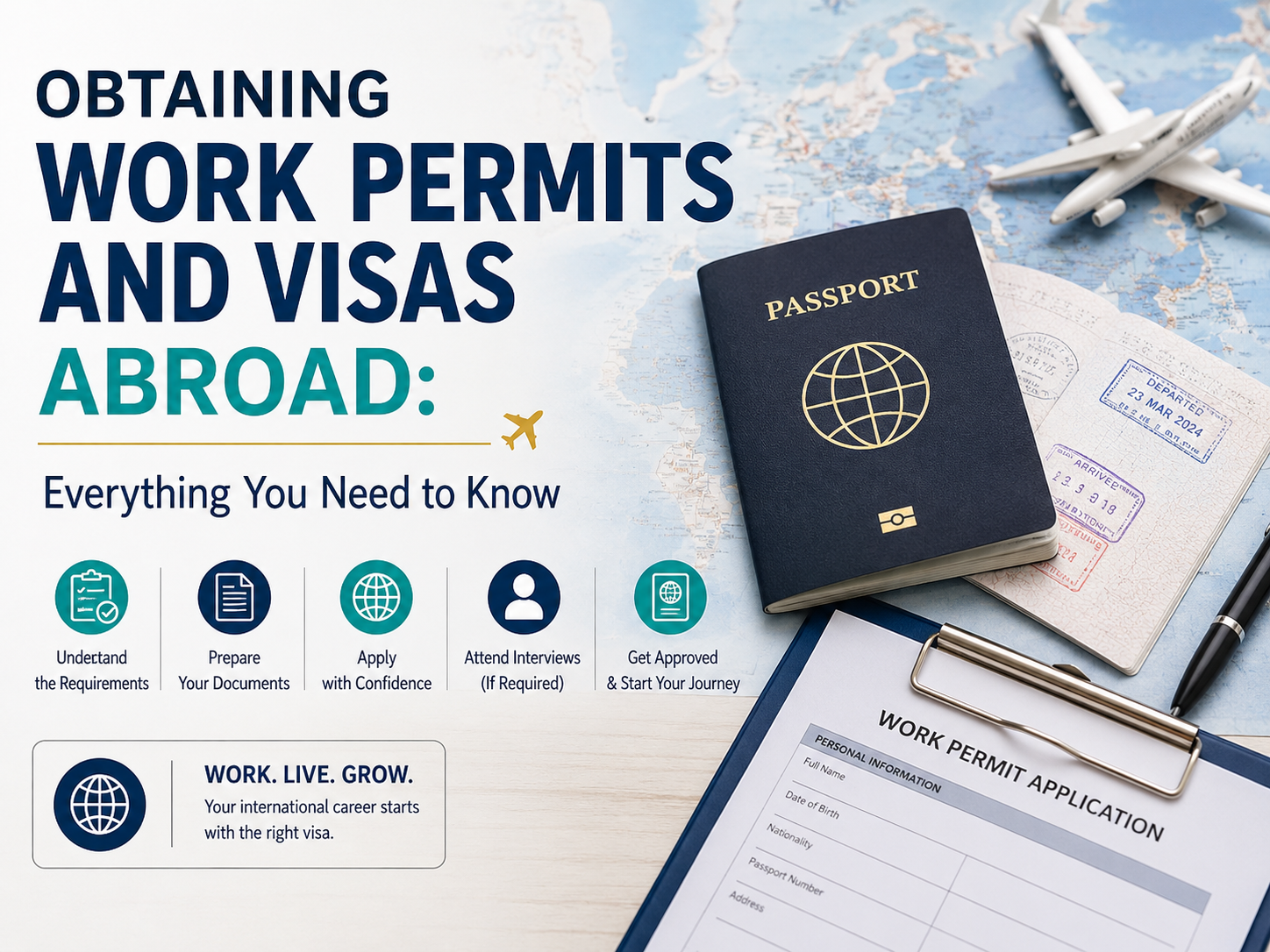
While the specific process varies by destination and visa type, a typical work visa application involves the following stages:
- Step 1: Secure a qualifying job offer from an eligible employer
- Step 2: Gather all required supporting documents (qualifications, experience certificates, financial statements)
- Step 3: Complete the official online or paper application form accurately and completely
- Step 4: Pay the applicable visa application fee
- Step 5: Submit biometric data at a visa application centre if required
- Step 6: Attend a visa interview if requested
- Step 7: Await a decision and comply with any additional requests for information
Common Reasons for Work Visa Refusals — and How to Avoid Them
Incomplete applications, inconsistencies in documentation, failure to meet salary thresholds, inability to demonstrate genuine employer sponsorship, and insufficient financial evidence are among the most common reasons for work visa refusals. A professionally prepared, meticulously documented application substantially reduces the risk of refusal and can significantly accelerate the processing timeline.
Bac International’s visa processing specialists have extensive experience in preparing work visa applications for a wide range of destination countries. We review every application for completeness and consistency before submission, dramatically improving our clients’ chances of a first-time approval.
Ready to take the next step? Bac International’s expert consultants are here to guide you every step of the way on your journey to securing your work permit and visa. Apply Now today at www.bac.com.bd and let us turn your global ambitions into reality.